
A Sourcing Guide for Houston Builders and Designers
If you spec countertops for Houston kitchens and baths, the Carrara look lands on nearly every mood board a client hands you. The question underneath it is almost always the same one: do you source natural Carrara marble, or an engineered Carrara quartz that reads the same once it is installed on the jobsite?
Here is the short version. Carrara quartz gives your clients the soft, feathery marble aesthetic they are asking for without the sealing, staining, and etching that turn into service calls six months after the walkthrough. For most trade projects moving through a Houston jobsite, that tradeoff is what settles the Carrara quartz vs marble countertops decision. The rest of this guide walks through where the two materials actually differ, so you can specify with confidence and back up the choice when a client pushes on it.
Does Carrara Quartz Actually Look Like Marble?
This is the first thing designers ask, and it is a fair question. Older engineered quartz was flat and repetitive, and a trained eye could spot it across the room. That is no longer the case. Modern Carrara quartz is engineered to capture the delicate dove-grey veining and soft white background that make natural Carrara so recognizable, and it holds that look consistently from slab to slab.
That consistency is a spec advantage, not just an aesthetic one. Natural marble is quarried, so veining varies block to block and you are matching lots by hand. Engineered Carrara quartz is manufactured to a controlled pattern, which matters when you are running the same look across a multi-unit development or a phased hospitality build.
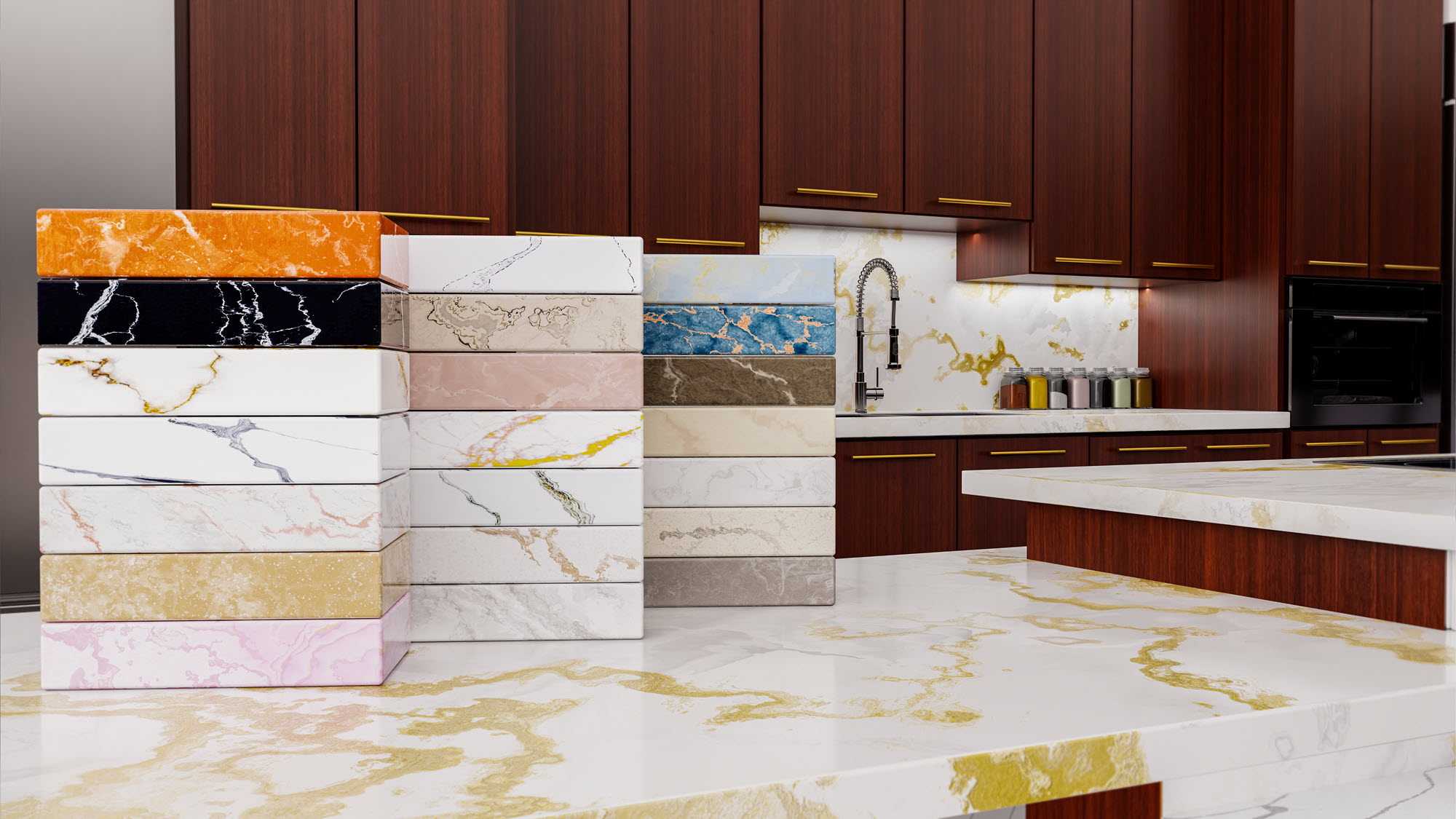
Apex Quartz USA produces its Carrara collection at a company-owned factory in Thessaloniki, Greece, and imports it directly to Houston, so what you approve in the warehouse is what shows up on site. The collection includes marble-look options such as Snow White, Light Cream, Nova, and Super White, giving you room to match different design directions without leaving the same material family.
Porosity, Staining, and Etching: Where Marble Costs You
The real separation between these two surfaces is not how they look on day one. It is how they behave over the life of the install.
Natural marble is calcium carbonate, and it is porous. Left unsealed, it absorbs liquids, which means red wine, coffee, and cooking oil can stain it. It also etches. Any acid, and that includes lemon juice, vinegar, tomato, and a lot of common cleaners, reacts with the stone and leaves a dull mark where the polish used to be. Etching is not a stain you can scrub out. It is a change to the surface itself. For a kitchen or a bar that sees daily use, that is a maintenance conversation you are handing to the client, and often a callback you are handing to yourself.
Engineered quartz is non-porous. The quartz is bound with resin during manufacturing, so there is no open pore structure for liquids to soak into, and the acids that etch marble do not affect it the same way. That is why marble-look quartz holds up in the exact high-traffic spaces where natural marble struggles.
Quartz is not indestructible, and it is worth being straight with clients about that. The resin that makes it stain-resistant is also sensitive to direct heat, so hot pans belong on trivets, not on the surface. Prolonged direct sunlight can affect color over time as well, which is a consideration for exterior or heavily glazed spaces. For standard interior applications, neither is a practical problem.
Carrara Quartz vs. Marble at a Glance
| Consideration | Natural Carrara Marble | Carrara Quartz |
|---|---|---|
| Porosity | Porous, absorbs liquids | Non-porous |
| Staining | Prone without diligent sealing | Highly stain resistant |
| Etching from acids | Yes, permanent dulling | Resists common household acids |
| Sealing | Recurring, required | None ever needed |
| Pattern consistency | Varies block to block | Consistent slab to slab |
| Heat | Tolerates heat well | Use trivets, avoid direct heat |
| Best fit | Low-use, display-forward areas | High-traffic kitchens and baths |
Ready to match a Carrara look to a live project? Apex stocks its Carrara quartz slabs at a 27,400-square-foot Houston warehouse holding more than 5,000 slabs, so you can pull samples and check inventory before you commit a spec. Contact the Apex team to schedule a warehouse visit.
Does Quartz Need Sealing Like Marble?
No, and this is one of the clearest wins for the trade. Natural marble has to be sealed at installation and resealed on a recurring schedule, often annually and more frequently in heavy-use areas, to keep its stain resistance up. That is a task that falls to the client, and when they skip it, the staining that follows tends to come back to whoever specified the material.
Carrara quartz is non-porous, so it never needs sealing. There is no product to buy, no reapplication schedule, and no window where the surface is vulnerable because a client forgot. For contractors and remodelers handing off a finished space, that removes a whole category of follow-up.
Longevity and Lifecycle: What Trade Professionals Should Weigh
Clients often frame this as an upfront price question. On a jobsite, the number that actually matters is total cost of ownership, and that is where the Carrara quartz vs marble countertops comparison tilts.
Longevity starts with how each surface handles daily wear. Engineered quartz is harder than marble and resists the scratching and chipping that show up on natural stone in a working kitchen, and because the color and veining run consistently through the material, small nicks are far less noticeable. Marble is softer and will show wear over time. Some clients want that lived-in patina, but many do not, and a surface that keeps its original finish is easier to hand off and easier to stand behind. Apex backs its Carrara quartz with a 10-year warranty, which is a useful signal to pass along when a client is weighing durability against the look of natural stone.
Cost follows from that. Marble carries ongoing cost after the install: sealing products, professional resealing, and the risk of stains or etching that lead to repair or replacement. Quartz carries none of that recurring maintenance load. Over the years a countertop is in service, the material that never needs sealing and rarely generates a callback protects your margin and your reputation more reliably than the one that does. Apex does not publish pricing on the blog, so request a quote for slab and prefabricated options scoped to your project.
Carrara Quartz vs. Marble: Which Surface Fits the Project?
Neither material is the answer for every job. The right call comes down to how the space will be used and what the client values.
Specify natural marble when the client specifically wants authentic quarried stone, understands that it will develop a patina, and is willing to own the sealing and careful use that come with it. It fits low-use, display-forward areas like a formal powder room or a fireplace surround more comfortably than a working kitchen.
Specify Carrara quartz when the space is high-traffic, when you need consistent veining across multiple units, or when a low-maintenance handoff matters. Kitchens, primary baths, hospitality, and commercial installs all favor a non-porous, sealing-free surface that keeps looking the way it did on install day. For most Houston trade projects, that is the practical choice.
Frequently Asked Questions
Q1: Is Carrara quartz better than real marble?
A1: It depends on the project. For high-traffic, low-maintenance installs where consistency matters, Carrara quartz usually wins. For clients set on authentic natural stone who accept its upkeep, marble has a place.
Q2: Does Carrara quartz look like real marble?
A2: Yes. Engineered veining closely mimics the soft grey veining and white background of natural Carrara, and it stays consistent slab to slab, which natural stone cannot guarantee.
Q3: Will Carrara quartz stain or etch?
A3: It is highly resistant to both. The non-porous surface resists staining, and it does not etch from the household acids that mark marble. Avoid direct heat and harsh chemicals to keep it looking its best.
Q4: Does quartz need to be sealed like marble?
A4: No. Carrara quartz is non-porous and never needs sealing. Marble requires sealing at install and recurring resealing to maintain stain resistance.
Q5: How much cheaper is Carrara quartz vs marble?
A5: Upfront material cost varies by grade and project, so the difference that matters most on a spec is lifecycle cost. Marble adds recurring sealing, plus the risk of stain or etch repairs, while Carrara quartz carries none of that ongoing maintenance. Request a quote for current slab and prefabricated options scoped to your project.
Q6: What is the best marble-look countertop that resists staining?
A6: For trade projects, engineered Carrara quartz is the strongest marble-look, stain-resistant option, since it pairs the aesthetic with a non-porous, low-maintenance surface.
Source Your Carrara Quartz in Houston
If your next spec calls for the Carrara look without the maintenance that comes with natural stone, Apex Quartz USA supplies Carrara quartz slabs and prefabricated countertops to builders, designers, and contractors across Houston and Texas, direct from its own factory in Greece and backed by a 10-year warranty. View the Carrara Quartz collection or contact the team to check inventory for your project.