An Honest Breakdown for the Trade
Bathroom remodels move fast in Houston, and the vanity surface is usually one of the first specs a client wants nailed down. For builders, designers, and fabricators, quartz is the default recommendation for most bathroom vanities, and for good reason: it is non-porous, low maintenance, and built to shrug off toothpaste, cosmetics, and daily splashes. But it is not the right call for every project, and knowing the tradeoffs lets you set client expectations before the job starts.
Houston’s humidity is exactly where a water-resistant surface earns its keep. Below is an honest look at the pros and cons of a quartz bathroom vanity countertop from a spec-and-fabrication standpoint: moisture resistance, thickness and edge options, cleaning, and how quartz compares to the marble-look surfaces clients keep asking for.
Is Quartz Good for a Bathroom Vanity Countertop?
The short version for your clients: quartz is among the most practical vanity surfaces you can spec. Because it is engineered from ground quartz and resin, it is non-porous, so it does not absorb water and never needs the sealing natural stone requires. In a bathroom, that translates to fewer callbacks over water rings, product stains, and the mildew that works into porous surfaces over time. It also resists chipping and scratching under daily use, which matters on a high-touch surface.
The Pros of a Quartz Bathroom Vanity
Where a quartz vanity countertop earns its place on a spec sheet:
- Moisture resistance is the headline. Quartz is non-porous, so water, soap, and toothpaste sit on the surface instead of soaking in, and there is no sealing schedule for the client to keep up with. In a humid Houston bathroom, that is a durability advantage you can stand behind.
- Cleaning is simple for the end user. Warm water and a little mild soap handle daily upkeep, with no harsh chemicals or abrasive pads that dull the finish over time. Easy maintenance means fewer complaints down the line.
- Stain and scratch resistance holds up to real use. Cosmetics, perfume, and everyday grooming products rarely leave a mark, and the hard surface resists the small nicks that show on softer materials.
- Style range keeps clients happy. Quartz runs from crisp bright whites to soft veined looks, so it suits modern, transitional, and traditional bathrooms alike. Because it is engineered, color and pattern stay consistent, which makes matching pieces and coordinating rooms across a project more predictable.
The Cons to Keep in Mind
No surface is perfect, and being upfront about the drawbacks is part of an honest pros and cons breakdown, and part of setting client expectations:
- Upfront cost runs higher than laminate or cultured marble vanity tops. Most clients find the longevity and low upkeep worth it, but it is a bigger line item, and it helps to frame it that way early.
- Heat sensitivity is worth flagging. The resin that binds quartz can scorch under high heat, so a hot flat iron or curling wand left directly on the surface can leave a mark. A heat-safe mat solves it easily, and a quick note to the client heads off a warranty conversation later.
- Direct sunlight can be a factor. Some quartz can fade or discolor after long, direct sun exposure, so a vanity sitting under a large, bright window is worth thinking through at the spec stage.
- Professional installation is required. Quartz is heavy, especially in thicker material, so it is templated and installed by a fabricator rather than treated as a DIY surface. For your projects that is a given, but it rules quartz out for any client hoping to self-install.
Thickness and Edge Options for Vanity Tops
Two choices shape how a quartz vanity looks and installs: thickness and edge profile.
Apex slabs come in 2cm and 3cm, and our prefabricated vanity tops arrive ready to install. For a custom vanity cut from slab, 2cm keeps the top lighter and slightly more economical, a common choice for bathrooms, while 3cm gives a more substantial, high-end look without needing a built-up edge. Both perform the same on durability and moisture resistance, so the decision is aesthetic and budgetary rather than functional.
Edge profile is where you set the tone. A squared or eased edge reads clean and modern, a bullnose softens the look for traditional bathrooms, and an ogee adds a decorative, layered detail. When a client wants the heft of a thick top on a tighter budget, a mitered edge on 2cm material can mimic the look of 3cm.
Speccing vanities for a current project? Browse the Apex Quartz Vanity Tops collection to compare single and double sink styles, or call our Houston team at (832) 856-APEX for current availability and custom sizing.
Quartz vs. Marble-Look Vanity Tops
A lot of bathroom projects start with a client showing you a picture of a marble vanity. The catch you already know: natural marble is porous and soft, so it stains and etches from the acidic products that live in a bathroom, like perfume, nail polish remover, and some cleaners, and it needs regular sealing to stay protected. That maintenance burden lands on the client, and the callback lands on you.
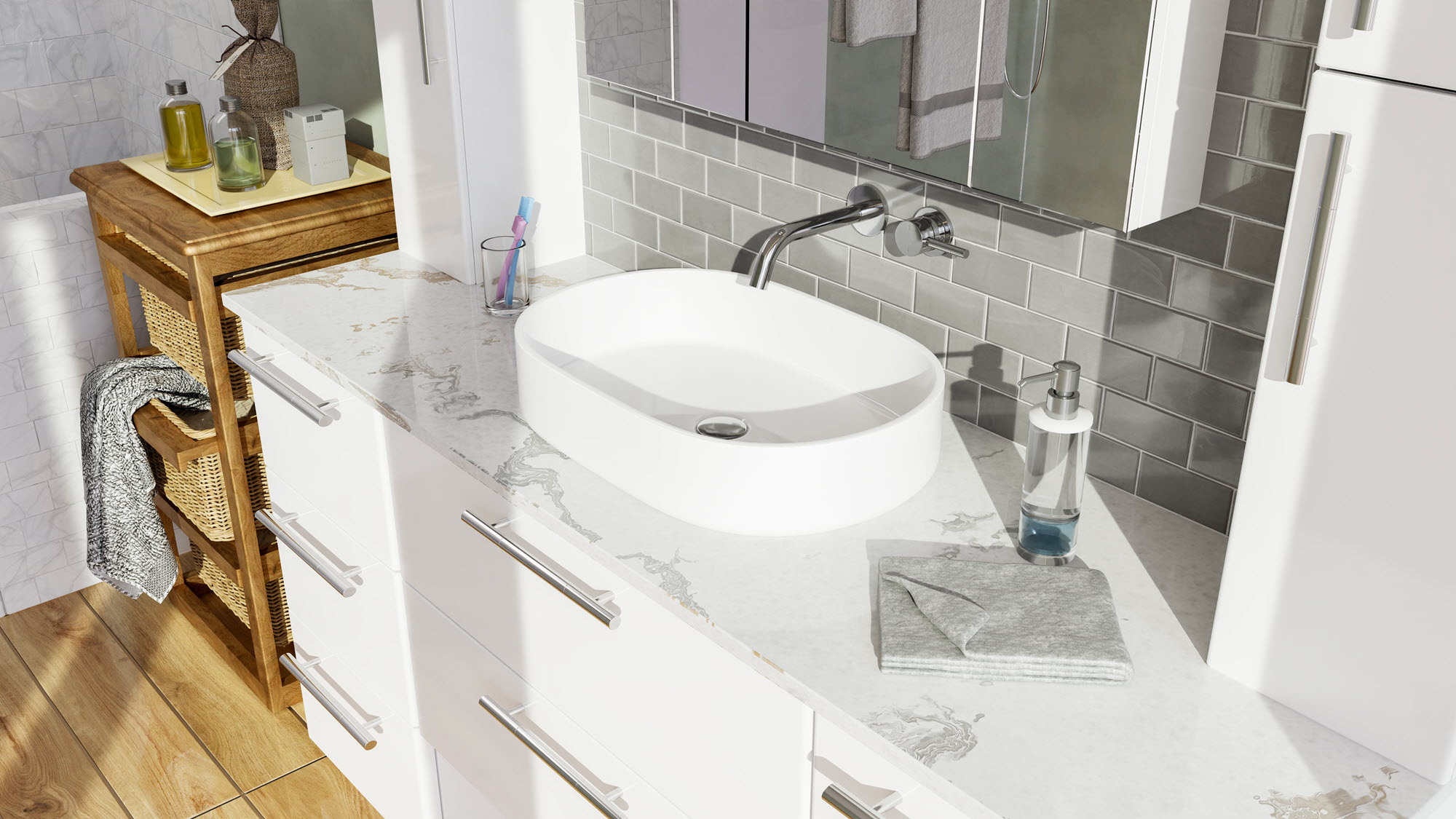
Marble-look quartz delivers the same veined, luxurious appearance without those headaches. Our Falls vanity top carries dramatic gray veining over a creamy white base, close to a quarried Calacatta look, while staying non-porous and low maintenance. For a busy bathroom, that mix of style and durability is an easy recommendation.
| Vanity Surface | Porosity | Maintenance | Best For |
| Quartz | Non-porous, no sealing | Low, soap and water | Busy, humid bathrooms that need durability |
| Natural marble | Porous, needs sealing | High, etches and stains | Low-use powder rooms where patina is welcome |
| Cultured marble / laminate | Non-porous | Low but wears faster | Tight budgets and short-term updates |
Who Quartz Vanity Tops Are Best For
Quartz vanity tops are the right spec when a project involves:
- A busy family or guest bathroom that sees heavy daily use, where durability keeps callbacks down.
- A client who wants the look of marble without the sealing, staining, and etching that come with the real thing.
- A remodel or build where resale matters and a durable, neutral surface adds recognizable value for the eventual buyer.
- A humid setting like Houston, where a non-porous top is a practical advantage worth putting on the spec sheet.
Other surfaces may be worth weighing on a very tight budget, or for a vanity that sits in constant, direct sunlight where fading is a concern. For most bathroom projects, though, the pros of a quartz bathroom vanity countertop outweigh the cons.
Frequently Asked Questions
Source Vanity Tops in Houston
Whether you are a designer sourcing a single high-end vanity or a builder speccing vanity tops across a development, Apex Quartz USA supplies ready-to-install Greek quartz vanity tops across Houston and Texas. Browse our Vanity Tops collection or call (832) 856-APEX to check inventory and request a quote.